
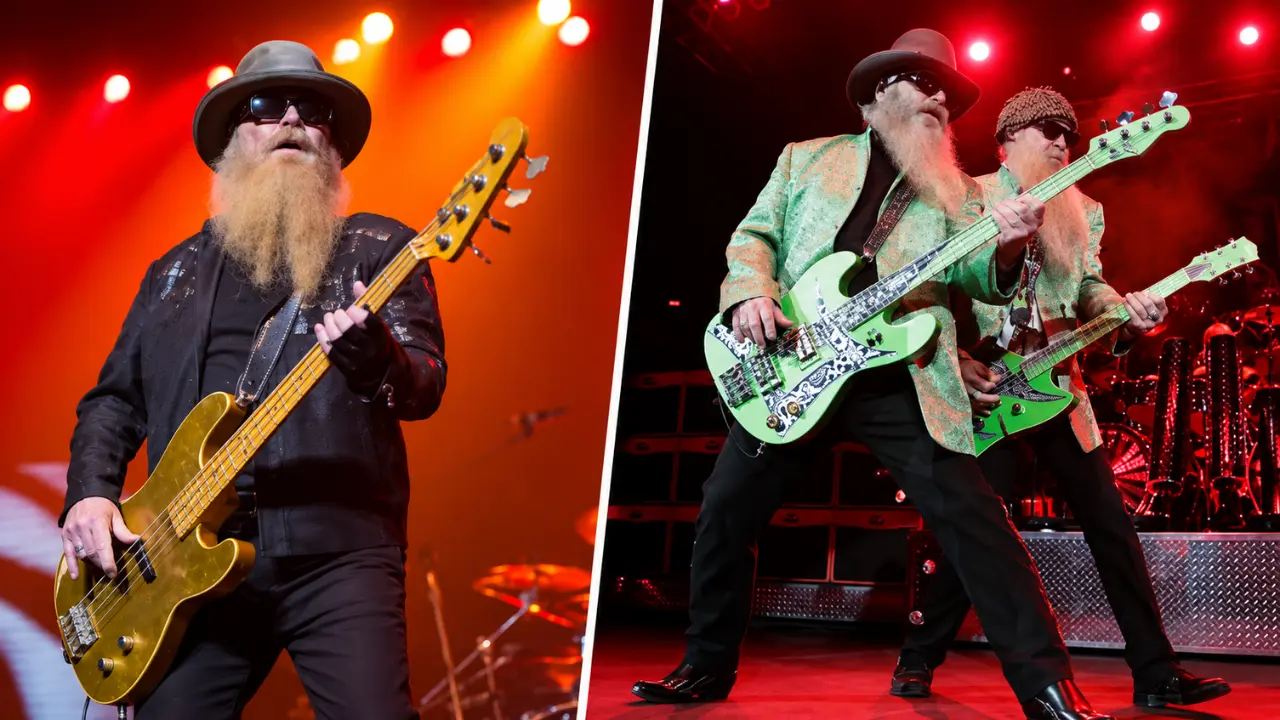
Dusty Hill was one of the defining figures behind ZZ Top’s unmistakable sound, but his contribution went well beyond playing bass in a famous rock band. Born Joseph Michael Hill in Dallas, Texas, he spent more than five decades performing with ZZ Top alongside Billy Gibbons and Frank Beard. His deep bass tone, high singing voice and restrained stage style gave the band a musical balance that was easy to overlook until you listened closely. From his teenage years playing music with his brother Rocky to his final years with ZZ Top, Dusty Hill built a career around blues, rock, humor and an unusually strong connection with his bandmates.
| Biography Detail | Information |
|---|---|
| Full Name | Joseph Michael Hill |
| Known As | Dusty Hill |
| Born | May 19, 1949 |
| Birthplace | Dallas, Texas, United States |
| Profession | Musician, Bassist, Singer |
| Known For | ZZ Top |
| Instruments | Bass, Vocals, Keyboards |
| Brother | Rocky Hill |
| Wife | Charleen McCrory |
| Daughter | Charity |
| Music Genre | Blues Rock, Southern Rock, Hard Rock |
| Years Active | 1960s–2021 |
| ZZ Top Joined | 1969–1970 |
| Rock & Roll Hall of Fame | 2004 |
| Died | July 2021 |
| Age at Death | 72 |
| Place of Death | Houston, Texas, United States |
| Famous Songs | “Tush,” “La Grange,” “Heard It on the X” |
| Famous Band | ZZ Top |
| Legacy | Longtime bassist and vocalist of ZZ Top |
Dusty Hill Early Life and Family Background
Dusty Hill was born on May 19, 1949, in Dallas, Texas, and grew up in the Lakewood neighborhood of East Dallas. His birth name was Joseph Michael Hill, while his older brother was John Rockford “Rocky” Hill, a guitarist who also became involved in the Texas blues scene. Music was already part of Dusty’s home life because his mother was a talented singer and had a strong interest in blues performers. Hill later recalled hearing artists such as Muddy Waters and Son House while growing up, giving him an early connection to the blues that would remain important throughout his career.
Hill did not originally set out to become a bass player. While attending Woodrow Wilson High School in Dallas, he learned to play the cello, which gave him an unusual musical starting point for a future rock bassist. His brother Rocky needed a bass player for a group, so Dusty moved from cello toward bass and began performing while he was still very young. That change helped put him on the stage early, where he developed his skills through actual performances rather than relying only on formal musical training.
How Rocky Hill Helped Start His Music Career
Rocky Hill played an important role in Dusty Hill’s development as a musician. Rocky was already interested in blues guitar and helped bring his younger brother into the local Dallas music scene. Dusty eventually performed with Rocky and drummer Frank Beard in several groups, including the Warlocks, the Cellar Dwellers and American Blues. Those early bands gave Hill and Beard years of experience before they became members of ZZ Top.
American Blues was particularly important because it connected three musicians who would later become part of the story of Texas rock. Dusty Hill, Rocky Hill and Frank Beard performed together during the 1960s, moving through the Dallas-Fort Worth-Houston circuit. Dusty’s experience in these groups exposed him to psychedelic rock as well as blues, helping shape the broad musical background that he later brought into ZZ Top. Rocky eventually followed his own path as a blues musician, while Dusty and Beard moved toward the band that would define their careers.
Dusty Hill and the Formation of ZZ Top
Dusty Hill and Frank Beard moved to Houston in the late 1960s, where they connected with guitarist Billy Gibbons. Gibbons had previously led the psychedelic rock group the Moving Sidewalks and was building a new band. Hill and Beard became part of the lineup that developed into ZZ Top, creating a three-piece combination built around guitar, bass and drums. The group signed with London Records and released its first album in 1971.
The early years were not an immediate commercial success. ZZ Top’s first albums established its Texas blues-rock identity but did not initially turn the musicians into international stars. The breakthrough came with later releases, particularly Tres Hombres in 1973, which brought the group a much wider audience. Dusty Hill’s bass playing helped create the heavy rhythmic foundation that allowed Gibbons’ guitar work to sound bigger while Frank Beard’s drumming kept the music moving with a tight Texas groove.
The Musical Role Dusty Hill Played in ZZ Top
Dusty Hill’s importance to ZZ Top was easy to underestimate because Gibbons often received more attention as the guitarist and main frontman. Hill’s role was different: he provided the low-end weight that connected Gibbons’ guitar to Beard’s drums. His bass lines were usually economical rather than designed to dominate the song, but that restraint gave ZZ Top its distinctive balance. The Guardian’s obituary described Hill’s playing as inventive, precise and closely integrated with both Gibbons and Beard.
Hill also believed that complicated playing was not automatically better playing. He understood that the bass had to serve the composition rather than compete with it, and he sometimes described disappearing into a song as a compliment. His approach allowed ZZ Top’s music to sound powerful without becoming cluttered. That philosophy became especially effective because the band had only three core musicians on stage.
What made Dusty Hill’s playing distinctive?
- A heavy, distorted bass tone that could overlap with Gibbons’ guitar
- Tight rhythmic interaction with Frank Beard
- Blues-based phrasing mixed with hard-rock weight
- A preference for musical economy instead of unnecessary complexity
- Strong stage chemistry with Billy Gibbons
- Lead and backing vocals that added another layer to ZZ Top’s sound
Hill also cited musicians including Cream bassist Jack Bruce and jazz players Stanley Clarke and Charles Mingus among his influences. His playing therefore came from more than traditional Texas blues alone. He took ideas from blues, rock and jazz and shaped them into something that fit ZZ Top’s compact three-piece format.
Dusty Hill’s Voice Was Part of ZZ Top’s Identity
Dusty Hill was not simply the bassist standing behind Billy Gibbons. He also sang lead and co-lead vocals on several ZZ Top songs, and his voice sounded very different from Gibbons’ lower, rougher vocal style. Hill’s higher tenor created a useful contrast within the band. That contrast became particularly memorable on songs where Hill took the lead.
One of the songs most closely associated with Dusty Hill is “Tush,” released on Fandango! in 1975. The song became one of ZZ Top’s signature tracks and showcased Hill’s ability to combine a straightforward vocal delivery with the band’s blues-rock rhythm. His singing gave the group another recognizable sound and helped prevent ZZ Top from relying entirely on Gibbons as its vocal presence.
The Story Behind “Heard It on the X”
“Heard It on the X” provides an interesting glimpse into the musical environment that shaped Dusty Hill and his bandmates. Hill explained that he, Billy Gibbons and Frank Beard had independently listened to powerful radio broadcasts coming from stations across the Mexican border. These stations brought blues, rock and other music into Texas audiences that might not have encountered the same records through conventional American radio.
The experience mattered because the three musicians discovered that they had absorbed many of the same influences before becoming ZZ Top. “Heard It on the X,” released on Fandango!, turned that shared experience into a song about the radio stations that helped shape their musical world. It is a good example of how Dusty Hill’s early memories of Texas and blues culture eventually became part of ZZ Top’s songwriting.
Tres Hombres and the Rise of ZZ Top
ZZ Top began reaching a wider audience with Tres Hombres in 1973. The album included “La Grange,” a song built around a familiar blues-boogie feel and inspired by the band’s Texas environment. The track became one of ZZ Top’s best-known early recordings and demonstrated how effectively Hill’s bass could work with Beard’s drumming and Gibbons’ guitar.
The group’s next major step came with Fandango! in 1975. The album reached the US Top 10 and included “Tush,” which became a major song in the band’s catalog. Dusty Hill’s vocals and bass playing were both prominent parts of the group’s developing identity. ZZ Top was becoming known not just as a Texas blues-rock act but as a band capable of building a distinctive personality around its music.
The Extraordinary Worldwide Texas Tour
The Worldwide Texas Tour showed just how unusual ZZ Top could be. Rather than putting on a conventional rock show, the band created a stage designed to resemble the Texas landscape. The production included real animals and a huge amount of equipment, turning a concert into something closer to a traveling theatrical production.
Hill later explained that the tour required multiple tractor-trailers carrying equipment that had to be positioned in a particular order. The stage included wildlife such as pigs, snakes and buffalo, and the production took so long to assemble and dismantle that the band sometimes spent more time setting up than performing. Plans to take the show to Europe ran into animal quarantine problems.
Why Dusty Hill Worked at an Airport
After years of touring and recording, ZZ Top took a break in the late 1970s. During that period, Dusty Hill worked at Dallas/Fort Worth International Airport. For a musician who had spent years living a highly unusual rock-and-roll life, the airport job offered something very different. Hill later explained that he wanted to feel normal and use the experience to ground himself.
The story says something useful about Hill’s personality. He could have spent the break simply enjoying the privileges associated with rock stardom, but instead he chose a very ordinary working environment. His decision also showed that he was not completely defined by the celebrity image that ZZ Top would later develop.
Eliminator and ZZ Top’s MTV Era
When ZZ Top returned with Degüello in 1979, the group began another successful phase. El Loco followed in 1981, but the band’s biggest commercial transformation came with Eliminator in 1983. The album combined the band’s blues-rock foundation with modern production techniques and a highly visual approach that worked extremely well on MTV.
Eliminator sold millions of copies and produced songs such as “Gimme All Your Lovin’,” “Sharp Dressed Man” and “Legs.” The music videos became almost as recognizable as the songs themselves, introducing ZZ Top to audiences who may not have previously followed Texas blues-rock. Hill remained at the center of the trio, and his appearance alongside Gibbons became an essential part of the band’s visual identity.
The ZZ Top image became instantly recognizable
The band’s appearance during this period included:
- Long beards worn by Hill and Gibbons
- Sunglasses and cowboy-style hats
- Hill and Gibbons moving as a visual pair
- Frank Beard standing out because he famously did not have a long beard
- The customized cars and larger-than-life imagery used in the band’s videos
- A stage presentation built around Texas humor and rock mythology
Hill and Gibbons were sometimes mistaken for each other because of their similar beards and sunglasses. The visual resemblance became part of ZZ Top’s identity, even though their musical roles were different. Gibbons usually handled most of the lead vocals and guitar work, while Hill supplied bass, selected lead vocals and a crucial part of the band’s stage chemistry.
Dusty Hill’s Acting and Television Appearances
Dusty Hill occasionally moved beyond music and appeared on television and in films. One of his better-known movie appearances came in Back to the Future Part III, which featured ZZ Top’s music. He also appeared in the television series Deadwood and made other entertainment appearances.
Another memorable connection was King of the Hill. Hill appeared as himself on the animated series, and the show created a fictional character also named Dusty Hill who was presented as Hank Hill’s cousin. That storyline belongs to the show’s fictional universe and should not be confused with the real musician’s family history. The real Dusty Hill’s connection to the show came through his appearance and voice work as himself.
Dusty Hill’s Accident in 1984
In December 1984, Dusty Hill accidentally shot himself in the abdomen with a small Derringer pistol. The firearm had been carried in his boot and discharged when his girlfriend was pulling the boot off. Hill survived the accident and later discussed it with a surprisingly humorous attitude.
The incident became one of the stranger stories attached to Dusty Hill’s life. He later admitted that his first reaction was disbelief that he had done something so careless. Despite the seriousness of the injury, Hill recovered and continued his career with ZZ Top.
Dusty Hill’s Health Problems During His Career
Hill dealt with several medical problems while continuing to perform. In 2000, ZZ Top canceled European tour dates after Hill was diagnosed with hepatitis C. In 2007, the group canceled European performances again when Hill required surgery connected with an acoustic neuroma. He also injured his hip in a fall on the band’s tour bus in 2014.
These incidents did not end his career. Hill continued recording and touring with ZZ Top for years afterward, maintaining the role he had held since the band’s formative period. His ability to keep performing through different setbacks became part of the story of his unusually long career.
Dusty Hill’s Wife and Family
Dusty Hill married actress Charleen McCrory in 2002 after their longtime relationship. The couple remained together until Hill’s death in 2021. Hill was known for keeping much of his personal life away from the intense public attention surrounding ZZ Top.
Hill also had a daughter named Charity. His family life rarely became a central part of his public image, which contrasted with the exaggerated persona ZZ Top presented on stage. The difference between his private life and the band’s flamboyant public identity is one reason his biography contains more musical information than personal anecdotes.
Dusty Hill and the Rock & Roll Hall of Fame
ZZ Top was inducted into the Rock & Roll Hall of Fame in 2004. Hill entered alongside Billy Gibbons and Frank Beard, formally recognizing the three musicians who had become one of rock’s most recognizable long-running lineups. Keith Richards of the Rolling Stones presented the band at the ceremony.
The induction reflected the unusual durability of ZZ Top. The same three-man lineup had spent decades recording and touring together, something relatively rare in rock music. For Dusty Hill, the recognition marked another major point in a career that had begun with local Texas clubs and eventually reached international stages.
Dusty Hill’s Final Years With ZZ Top
Hill remained active with ZZ Top well into his seventies. In July 2021, however, he left the band’s tour because of a hip problem and returned to Texas for treatment. The group performed with longtime guitar technician Elwood Francis taking Hill’s place on bass during the remaining shows.
Hill died at his home in Houston in July 2021 at the age of 72. Billy Gibbons and Frank Beard announced that their longtime bandmate had died in his sleep, but the initial announcement did not provide a cause of death. Later reporting connected his final period with chronic health problems, but the contemporary announcement itself did not establish that his hip injury caused his death.
Why ZZ Top Continued After Dusty Hill’s Death
Dusty Hill’s departure did not mean the end of ZZ Top. According to accounts surrounding his final wishes, Hill wanted the band to continue rather than break up after his death. Elwood Francis therefore became the bassist for the continuing lineup.
Hill had also recorded bass and vocal parts before his death for material that could later be used by the band. That meant his musical contribution did not suddenly disappear when he died. For fans, the decision to continue also reflected Hill’s own apparent wish that ZZ Top’s music should carry on.
Dusty Hill’s Musical Legacy
The legacy of Dusty Hill rests heavily on how well he understood his place inside a three-piece band. He did not need to dominate every song to make his presence obvious. His bass filled the space between Gibbons’ guitar and Beard’s drums, while his vocals gave ZZ Top another recognizable voice. The combination created a sound that remained identifiable across changes in production, technology and popular music.
Hill also demonstrated that a musician can become iconic without constantly seeking the spotlight. Billy Gibbons was often the more obvious frontman, but ZZ Top depended on the chemistry among all three members. Hill’s long partnership with Gibbons and Beard became one of the central reasons the band could maintain such a consistent identity for more than five decades.
Dusty Hill’s Influence on Rock Bass
For bass players, Dusty Hill remains notable because his approach shows how much impact can come from serving the song. He used tone, timing and space rather than filling every measure with complicated runs. His distorted sound allowed the bass to occupy more of the same sonic territory as the guitar while still providing the rhythmic foundation.
His approach also suited ZZ Top’s blues background. The band could sound heavy without abandoning the rhythmic traditions that influenced its members during their youth in Texas. Hill’s bass therefore became part of the bridge between traditional blues, Texas boogie, hard rock and the polished sound of 1980s mainstream rock.
Frequently Asked Questions About Dusty Hill
Who was Dusty Hill?
Dusty Hill was an American musician best known as the bassist and vocalist of ZZ Top. Born Joseph Michael Hill in Dallas, Texas, he spent more than five decades with the band. He also played keyboards and contributed lead and backing vocals to ZZ Top’s recordings.
What was Dusty Hill’s real name?
Dusty Hill’s birth name was Joseph Michael Hill. He was born on May 19, 1949, in Dallas, Texas, and became widely known by the stage name Dusty Hill during his professional music career.
Who was Dusty Hill’s brother?
Dusty Hill’s older brother was Rocky Hill, a Texas blues guitarist and singer. The two brothers performed together in American Blues before Dusty later joined ZZ Top. Rocky went on to work with blues musicians including John Lee Hooker, Lightnin’ Hopkins, Freddie King and Jimmy Reed.
Who was Dusty Hill’s wife?
Dusty Hill married actress Charleen McCrory in 2002. They had been together for years before their marriage and remained married until his death in 2021. Hill also had a daughter named Charity.
When did Dusty Hill die?
Dusty Hill died in July 2021 at the age of 72. His bandmates Billy Gibbons and Frank Beard announced that he had died in his sleep at his home in Houston, Texas. The initial announcement did not give a cause of death.
Conclusion
Dusty Hill’s story is much bigger than the image of the bearded bassist standing beside Billy Gibbons on a ZZ Top stage. He began as a Dallas teenager who moved from cello to bass, played in local groups with his brother Rocky and Frank Beard, and eventually became one-third of a band that lasted for more than 50 years. His bass playing, vocals and stage partnership with Gibbons helped give ZZ Top its distinctive character, from the early blues-rock records through the MTV era and beyond.
His career also contained plenty of unusual chapters, including the massive Worldwide Texas Tour, his decision to work at an airport during the band’s break, his acting appearances, a serious accidental shooting and several health setbacks. Through all of it, Dusty Hill remained closely connected to the music that had shaped him as a young Texan. His death brought an end to his personal run with ZZ Top, but the recordings and performances he created with Billy Gibbons and Frank Beard continue to define his place in rock history.
For more biographies, career stories, and personal profiles of well-known personalities from music, film, television, and entertainment, explore our Celebrity Biography category.