
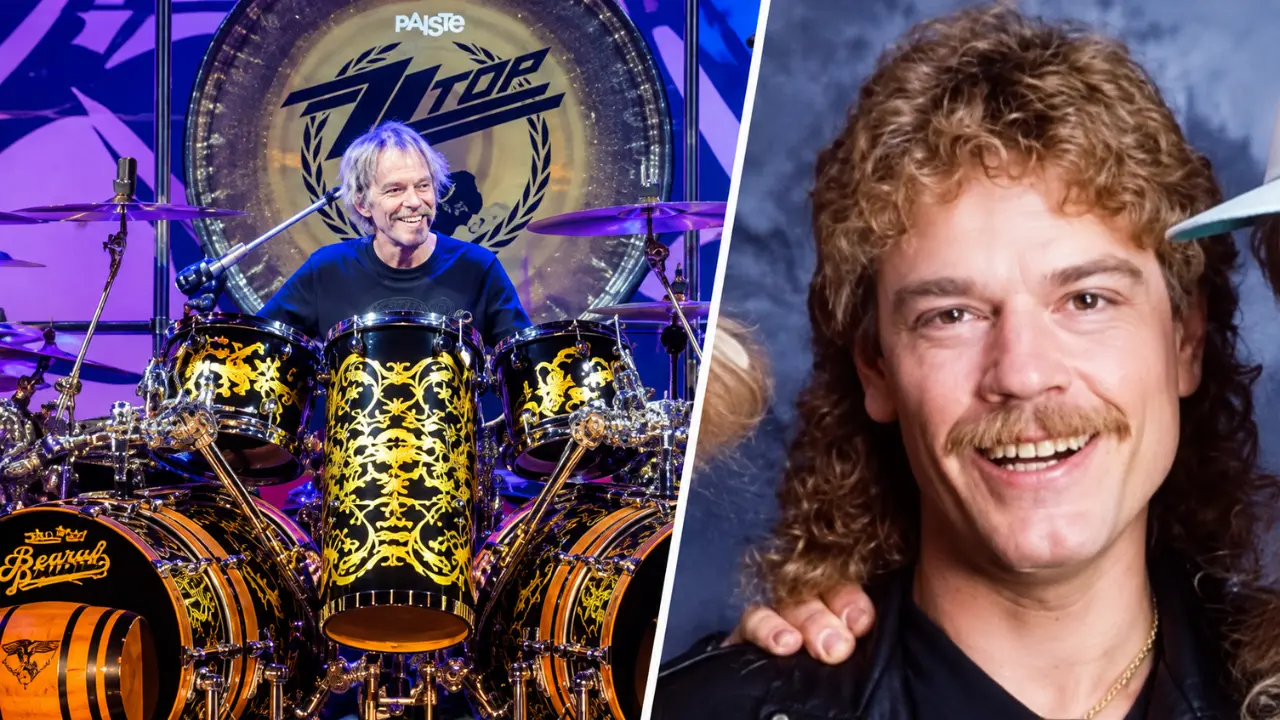
Frank Beard was an American drummer best known as the longtime drummer of ZZ Top, the Texas rock band that became famous for its blues-based sound, sharp humor, distinctive image, and decades of touring. Born in Texas, Beard spent more than five decades behind the drum kit with Billy Gibbons and Dusty Hill, helping create the rhythm that became one of rock music’s most recognizable sounds. His career included early work with several Texas bands, international success with ZZ Top, personal struggles, sports-car racing, and a long period as one of the most respected drummers in blues rock. Although his surname suggested otherwise, he was also famously the only member of ZZ Top who did not wear the group’s trademark long beard.
Frank Beard remained closely connected to ZZ Top from its formative years through the band’s transformation into an international act. His playing was particularly important to the group’s Texas shuffle style, where the drums, bass, and guitar worked together to create a relaxed but powerful groove. From early albums such as Tres Hombres to the massive commercial success of Eliminator, Beard helped provide the musical foundation beneath Billy Gibbons’ guitar work and Dusty Hill’s bass. His death in 2026 brought an end to one of the longest-running drummer positions in major rock history, but his contribution to ZZ Top remains part of the band’s identity.
| Biography Detail | Information |
|---|---|
| Full Name | Frank Lee Beard |
| Known As | Frank Beard |
| Profession | Drummer, Musician |
| Famous For | Drummer of ZZ Top |
| Date of Birth | June 11, 1949 |
| Place of Birth | Frankston, Texas, United States |
| Nationality | American |
| Music Genre | Blues Rock, Rock, Boogie Rock |
| Years Active | 1960s–2026 |
| Famous Band | ZZ Top |
| Joined ZZ Top | 1969 |
| Wife | Debbie Meredith |
| Children | Three |
| Notable Songs | La Grange, Sharp Dressed Man, Gimme All Your Lovin’, Legs |
| Major Achievement | Rock & Roll Hall of Fame induction with ZZ Top |
| Died | August 17, 2026 |
| Age at Death | 77 |
| Place of Death | Richmond, Texas, United States |
| Cause of Death | Not publicly disclosed |
| Known For | Texas shuffle drumming and long-running ZZ Top career |
Frank Beard Early Life and Childhood
Frank Lee Beard was born on June 11, 1949, in Frankston, Texas, and grew up in the Dallas-area community of Irving. His early surroundings placed him close to the Texas music culture that would later become a major part of his professional identity. Like many musicians who came through the Texas rock scene, Beard developed his skills by playing in local groups and learning through live performances. His early years were not marked by immediate fame, but they gave him the experience that would eventually prepare him for a career lasting more than half a century.
Beard became interested in drumming while still young and developed a style that emphasized timing, groove, and energy rather than unnecessary showmanship. He learned to work within a band rather than simply treating the drums as a solo instrument. That approach became especially useful when he later joined ZZ Top, where the music depended heavily on the interaction between drums, bass, and guitar. His ability to maintain a strong groove became one of the reasons his playing fitted the band’s blues-rock sound so naturally.
Before achieving international recognition, Frank Beard spent years moving through the Texas music circuit. He played with groups including the Cellar Dwellers, the Hustlers, the Warlocks, and American Blues. These experiences gave him the opportunity to develop his stage skills and establish relationships with other musicians. His time in American Blues was particularly significant because he played alongside Dusty Hill, creating the musical partnership that would eventually become part of ZZ Top’s foundation.
Frank Beard Before ZZ Top
Frank Beard’s career before ZZ Top included an unusual chapter involving an American touring version of the British group the Zombies. This period showed how active Beard was within the regional music business before becoming associated with one of America’s most famous rock bands. His early career was not a straight path toward instant success, and he spent years playing with different musicians and groups. Those experiences helped him become a more adaptable drummer and introduced him to different approaches to rhythm and live performance.
His relationship with Dusty Hill became increasingly important during these years. The two musicians had already developed a working relationship through their earlier groups, and their shared experience helped establish the rhythm section that would later become central to ZZ Top. Beard’s connection with Billy Gibbons then helped bring the three musicians together. The formation of the group was therefore not simply the result of three strangers meeting at the right time, but the product of relationships developed through years of playing around Texas.
The musicians who eventually formed ZZ Top had different backgrounds, but they shared an interest in blues-driven rock. Beard’s drumming provided a steady foundation, Hill supplied the bass, and Gibbons developed the guitar sound that would become the band’s trademark. Their three-piece arrangement allowed each member to occupy an important part of the musical space without requiring a large lineup. That simplicity became one of ZZ Top’s greatest strengths.
How Frank Beard Helped Form ZZ Top
ZZ Top began taking shape in 1969, with Frank Beard joining Billy Gibbons and Dusty Hill during the band’s formative period. The three musicians created a lineup that would remain remarkably stable for decades. While many major rock groups experienced repeated personnel changes, ZZ Top’s classic trio maintained the same three members for more than five decades. That continuity became a defining feature of the band and made Beard one of the longest-serving members of a major rock act.
Frank Beard was more than the person responsible for keeping time. His playing allowed Gibbons to stretch his guitar work while still maintaining a strong rhythmic foundation. Dusty Hill’s bass filled out the lower end, while Beard’s drums gave the songs their forward movement. The three musicians developed a chemistry that became difficult to separate from the ZZ Top sound itself.
Several qualities helped define Beard’s role in the group:
- Strong Texas shuffle rhythms
- Tight coordination with Dusty Hill’s bass
- A controlled but powerful drumming style
- Ability to support guitar-heavy arrangements
- Consistent live performances over decades
- A strong understanding of blues and rock rhythm
This combination helped ZZ Top develop a sound that was immediately recognizable. Beard did not need elaborate drum solos to become important to the band because his greatest contribution came from the way he supported the entire arrangement. His drumming was often about feel, timing, and consistency.
Frank Beard and the Rise of ZZ Top
ZZ Top released its first album, ZZ Top’s First Album, in 1971. The record introduced the group’s Texas blues-rock sound and established the foundation for the albums that followed. The band built its reputation through constant touring, developing a loyal audience before becoming a major commercial success. Beard’s ability to maintain the band’s energetic rhythm during live performances was an important part of this growth.
The band’s third studio album, Tres Hombres, released in 1973, became a major turning point. The record included La Grange, one of ZZ Top’s best-known songs and a track that demonstrated the band’s ability to combine blues traditions with a harder rock sound. Beard’s drumming helped create the rolling shuffle beneath Gibbons’ guitar and vocals. The song became a defining part of the group’s catalog and helped push the album into the Billboard 200’s top 10.
ZZ Top continued releasing successful records throughout the 1970s. Albums such as Fandango!, Tejas, and Degüello expanded the band’s audience while keeping its Texas identity intact. Beard remained behind the drums throughout this period, becoming an increasingly important part of the group’s established sound. His playing helped the band move between blues, boogie, rock, and more experimental production without losing its rhythmic character.
Frank Beard and the Sound of La Grange
La Grange remains one of the clearest examples of Frank Beard’s importance to ZZ Top. The track begins with a distinctive rhythmic feel before the guitar and vocal elements settle into the song’s famous blues-rock groove. Beard’s playing creates movement without overpowering the guitar, allowing Billy Gibbons’ guitar tone to remain the main focus. The result is a track that feels loose while remaining carefully controlled.
That balance became a recurring feature of Beard’s style. He understood that a drummer in a three-piece blues-rock band needs to create enough power to fill the arrangement without making the music feel crowded. His approach allowed the guitar and bass to interact naturally while the drums maintained the pulse. This is one reason Beard’s contribution is often more noticeable when listeners pay attention to the rhythm rather than just the vocals and guitar.
Frank Beard and the Eliminator Era
The 1980s changed ZZ Top’s career dramatically. The release of Eliminator in 1983 introduced a more polished sound that incorporated synthesizers, programmed elements, and modern studio production alongside the band’s established blues-rock identity. Songs such as Gimme All Your Lovin’, Sharp Dressed Man, and Legs became international hits. The album eventually sold more than 10 million copies in the United States and became the band’s biggest commercial success.
The success of Eliminator also created a complicated period for Frank Beard. His struggles with substance abuse affected his ability to participate consistently in the recording process, and parts of the album’s percussion were created through studio programming and other production techniques. This aspect of the record’s history is sometimes simplified, but the reality was more complicated than simply saying Beard did not play on the album. The story reflects both the changing technology of rock production and the personal difficulties Beard was dealing with at the time.
Despite the problems surrounding the recording period, Beard remained a member of ZZ Top and eventually continued his career with the band. His ability to recover and remain part of the group became an important part of his later story. Rather than allowing one difficult period to define his entire career, Beard continued performing and recording with ZZ Top for decades afterward.
Frank Beard’s Drumming Style
Frank Beard’s drumming was closely connected to the Texas blues tradition. He was particularly associated with the Texas shuffle, a rhythmic style that gives blues-rock its distinctive swing and forward motion. His playing was powerful without relying heavily on flashy technical displays. Instead, he focused on creating grooves that gave Gibbons and Hill room to work.
The rhythm section was crucial to ZZ Top because the band operated as a three-piece for most of its history. With only guitar, bass, and drums at the center of the arrangement, every musical decision became more noticeable. Beard had to provide enough rhythmic weight to make the songs sound full while leaving space for the guitar and bass. His consistency made that difficult balance appear natural.
His playing can be heard across decades of ZZ Top recordings, from the early blues-rock albums through the band’s commercially successful 1980s period and its later work. The technology surrounding the band changed, but Beard’s fundamental approach remained connected to groove and timing. That consistency helped preserve the band’s musical identity even as its production style evolved.
Why Frank Beard Did Not Have a Long Beard
One of the strangest pieces of rock trivia involves Beard’s appearance. Despite being named Frank Beard, he was the only member of ZZ Top who did not have the group’s famous long beard. Billy Gibbons and Dusty Hill became internationally recognizable for their enormous facial hair, while Beard usually appeared with a mustache or a much shorter beard.
The contrast became a running joke among fans and journalists. His surname made the situation even more amusing because casual observers could easily assume that all three members of ZZ Top would have beards. Beard occasionally changed his facial hair over the years, but he never adopted the enormous beard associated with Gibbons and Hill.
The joke became part of ZZ Top’s public identity, but Beard himself was much more than the punchline. Behind the humor was a musician who had spent decades helping define the band’s sound. His surname may have attracted attention, but his drumming was what gave him his lasting place in rock history.
Frank Beard’s Personal Life and Family
Frank Beard’s personal life remained more private than the public image of ZZ Top might suggest. He was married to Debbie Meredith, and the couple built a family life away from much of the attention surrounding the band. Reports identify three children, including twin sons Rory and Nico and a daughter from an earlier marriage. Beard’s family became especially important during his final period when he was receiving hospice care.
Beard was previously married to Catherine Alexander before his marriage to Meredith. His family life developed alongside a career that required extensive touring and long periods away from home. Maintaining that balance can be difficult for musicians who spend decades on the road, but Beard managed to maintain a long-running family relationship while continuing his work with ZZ Top.
Outside music, Beard also developed an interest in sports-car racing. During the early 1990s, he participated in endurance racing events, including the 24 Hours of Daytona and the 12 Hours of Sebring. His involvement in racing demonstrated another side of his personality and gave him a pursuit outside the world of touring and recording.
Frank Beard’s Struggles and Recovery
Like many musicians who became successful during the rock era, Frank Beard faced personal challenges during his career. His struggles with substance abuse became particularly significant around the period when ZZ Top was recording and promoting Eliminator. Those problems affected his professional life and contributed to one of the more difficult chapters in the band’s history.
What stands out is the length of Beard’s career after that period. He continued working with ZZ Top for decades and remained part of the band’s core identity. His later career demonstrated that the problems he faced in the 1980s did not prevent him from building a long and productive professional life.
His story is therefore better understood as one of recovery and endurance rather than simply a story about addiction. Beard continued performing, recording, touring, and developing interests outside music. His ability to remain with ZZ Top for more than five decades became one of the strongest parts of his professional legacy.
Frank Beard’s Health Problems and Final Years
Frank Beard experienced health problems at different points during his career. In 2002, he missed ZZ Top performances after undergoing an emergency appendectomy. Years later, he again experienced health difficulties that affected his ability to tour with the group.
In March 2025, Beard stepped away from touring because of health problems that were later reported to involve his foot and ankle. His absence was significant because he had remained ZZ Top’s drummer for decades with only occasional interruptions. Fans had become accustomed to seeing the same three-member lineup, making his absence particularly noticeable.
In 2026, concerns about his health became more serious. ZZ Top cancelled a Hollywood Bowl appearance in August, shortly before Beard’s death. The developments marked the end of an extraordinary touring career that had lasted more than five decades.
Frank Beard Death and Cause of Death
Frank Beard died on August 17, 2026, at the age of 77. He died at his ranch in Richmond, Texas, while receiving hospice care and surrounded by members of his family. His death marked the loss of the drummer who had been part of ZZ Top since its formative years in 1969. The cause of death was not publicly disclosed.
Beard’s death came five years after the death of Dusty Hill in 2021. That meant the classic ZZ Top trio that had remained together for decades had lost two of its three original members. Billy Gibbons was left as the surviving original member of the famous lineup, while the band faced the difficult question of how to continue.
The news prompted tributes from musicians, fans, journalists, and people connected to ZZ Top. Beard’s long career was repeatedly highlighted because few major rock groups maintained such a stable lineup for such a long period. His death was therefore not only the passing of a drummer but also the end of one of rock music’s most unusual long-term partnerships.
Frank Beard’s Final Years With ZZ Top
Beard remained connected to ZZ Top even as his health declined. His final years showed how much the band had become part of his life after decades of touring and recording. The group’s identity had been built around the chemistry between Beard, Gibbons, and Hill, so changes to that lineup carried considerable emotional weight.
Beard’s final public performance with ZZ Top is reported to have taken place on November 2, 2025, at Viejas Casino & Resort in Alpine, California. After that period, his health prevented him from continuing the band’s demanding touring schedule. His absence became permanent following his death in August 2026.
One of the most meaningful details surrounding his final years was his reported wish that ZZ Top continue after he was gone. That wish reflected the importance of the band in his life and his understanding that its music belonged to audiences as well as its members.
What Happened to ZZ Top After Frank Beard’s Death?
ZZ Top did not immediately end following Beard’s death. The band cancelled several scheduled performances after the news before returning to the stage. Billy Gibbons and Elwood Francis continued the touring lineup, with Michael Monahan taking over the drum position.
The decision to continue is consistent with Beard’s reported wishes. ZZ Top had already faced the death of Dusty Hill in 2021, after which the band continued touring with Elwood Francis on bass. The group’s ability to continue after losing another founding member represents a new chapter rather than an attempt to recreate the past.
For fans, the situation is complicated because the classic lineup can never be completely restored. Beard’s playing was part of the band’s original chemistry, and no replacement can duplicate decades of shared musical experience. Even so, continuing the music allows the songs and style that Beard helped create to remain part of live rock culture.
Frank Beard’s Legacy in Rock Music
Frank Beard’s legacy is tied closely to consistency. He played drums for ZZ Top from its formative period through its rise from a Texas blues-rock group to an internationally recognized band. During that time, he performed on records that became important parts of American rock history and toured extensively around the world.
His contribution is especially significant because ZZ Top’s identity depended on the chemistry of three musicians. Beard’s drums worked with Dusty Hill’s bass to create the foundation for Billy Gibbons’ guitar. Removing any one of those elements changes the character of the music, which is why Beard’s role deserves attention beyond simply calling him “the drummer of ZZ Top.”
Several parts of his legacy stand out:
- More than five decades as ZZ Top’s drummer
- A central role in the band’s Texas blues-rock sound
- Contributions to classic songs such as La Grange
- Participation in the band’s transformation during the Eliminator era
- Rock & Roll Hall of Fame recognition with ZZ Top
- A long career despite personal and health challenges
- A reputation for strong groove-based drumming
- A place in one of rock music’s longest-running three-member lineups
His story also demonstrates how important a rhythm section can be. Guitarists and singers often receive the most attention, but Beard’s drumming helped make ZZ Top’s songs move the way they did. His ability to maintain a groove over thousands of performances became an essential part of the band’s sound.
Why Frank Beard Remains Important to ZZ Top History
The story of ZZ Top cannot be told properly without Frank Beard. Billy Gibbons may have been the band’s guitar hero and Dusty Hill became an iconic bassist, but Beard supplied the rhythmic engine that connected their instruments. The group’s music depended on the space between guitar, bass, and drums, and Beard understood exactly how to occupy that space.
His career also stands out because of its unusual longevity. Musicians frequently leave successful bands because of personal disagreements, creative differences, health problems, or changing musical interests. Beard remained with ZZ Top through changing decades, musical trends, recording technology, and cultural shifts.
That consistency helped turn ZZ Top into more than a successful rock band. The group became an institution of American music, and Beard was there for almost the entire journey. His name will therefore remain connected to the band’s history whenever listeners revisit its classic recordings.
Frequently Asked Questions About Frank Beard
Who was Frank Beard?
Frank Beard was an American drummer best known as a founding-era member and longtime drummer of ZZ Top. He joined the developing Texas rock group in 1969 alongside Billy Gibbons and Dusty Hill. Beard remained with ZZ Top for more than five decades and helped define its blues-rock and Texas shuffle sound.
When did Frank Beard die?
Frank Beard died on August 17, 2026, at the age of 77. He died at his ranch in Richmond, Texas, while receiving hospice care and surrounded by family. His cause of death was not publicly disclosed.
Who was Frank Beard’s wife?
Frank Beard was married to Debbie Meredith. The couple married in 1982 and had twin sons, Rory and Nico. Beard also had a daughter from an earlier marriage.
Why didn’t Frank Beard have a beard?
Frank Beard was famously the only member of ZZ Top who did not wear the group’s trademark long beard. Billy Gibbons and Dusty Hill became known worldwide for their long facial hair, while Beard usually wore a mustache or shorter facial hair. His surname made the contrast an enduring joke among ZZ Top fans.
What was Frank Beard’s role in ZZ Top?
Frank Beard was the band’s drummer and one of the musicians responsible for creating its distinctive rhythm. His playing was strongly influenced by Texas blues and shuffle rhythms, giving the band’s guitar and bass a firm foundation. He remained ZZ Top’s drummer for more than five decades and became an important part of the group’s musical legacy.
Conclusion
Frank Beard’s life was much bigger than the joke created by his name. He was a skilled Texas drummer who helped form ZZ Top, played on some of the band’s most important recordings, survived difficult personal periods, explored sports-car racing, and remained behind the drum kit for more than five decades. His work helped create the rhythmic foundation behind songs that became part of American rock culture.
The history of Frank Beard is also the history of ZZ Top itself. From the band’s early Texas club years to the worldwide success of Eliminator and the decades of touring that followed, Beard remained one of its defining members. His death in 2026 marked the end of an extraordinary career, but the music he helped create continues to keep his contribution alive.
Frank Beard may have been the ZZ Top member without the famous beard, but his place in the band’s history is unmistakable. His drumming, consistency, and chemistry with Billy Gibbons and Dusty Hill helped turn a Texas blues-rock trio into an internationally recognized institution. For that reason, his legacy will continue to be remembered whenever the story of ZZ Top and its remarkable five-decade career is told.
For more stories about famous musicians, actors, public figures, and their personal journeys, explore our celebrity biographies to discover more detailed life stories and career profiles.