
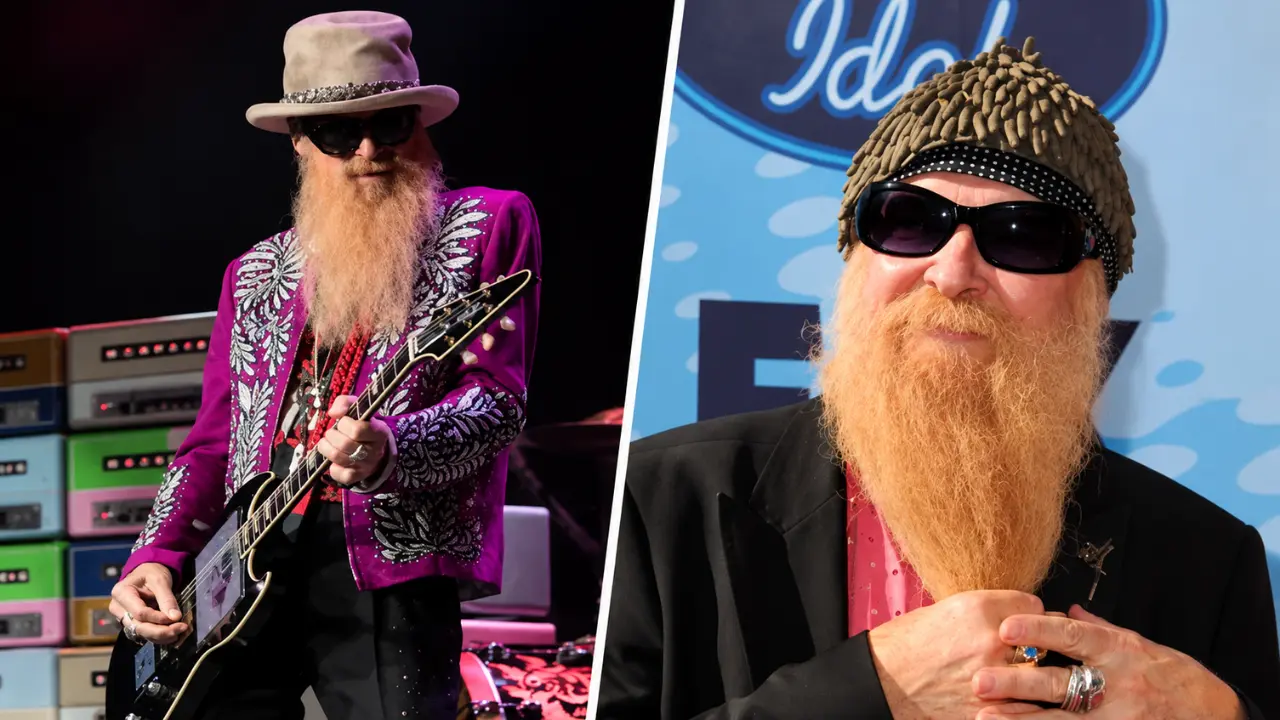
Billy Gibbons is one of the most recognizable guitarists in American rock music, best known as the guitarist and vocalist of ZZ Top. His career stretches from the psychedelic rock scene of 1960s Houston to decades of international success with one of rock’s most distinctive bands. Along the way, billy gibbons developed a signature guitar sound, a recognizable appearance, and a deep connection to blues music, classic cars, and Texas culture. His work with ZZ Top, his solo albums, collaborations, and television appearances have made him much more than a member of a successful rock trio.
| Category | Details |
|---|---|
| Full Name | William Frederick Gibbons |
| Known As | Billy Gibbons |
| Date of Birth | December 16, 1949 |
| Place of Birth | Houston, Texas, United States |
| Profession | Musician, Guitarist, Singer, Songwriter |
| Best Known For | Guitarist and vocalist of ZZ Top |
| Musical Genres | Blues Rock, Rock, Southern Rock, Boogie Rock |
| Famous Band | ZZ Top |
| Years Active | 1960s–present |
| Early Band | Moving Sidewalks |
| Famous Guitar | 1959 Gibson Les Paul “Pearly Gates” |
| Other Known Guitar | Gretsch BillyBo |
| Wife | Gilligan Stillwater |
| Marriage | 2005 |
| Notable Solo Albums | Perfectamundo, The Big Bad Blues, Hardware |
| Famous ZZ Top Songs | La Grange, Sharp Dressed Man, Gimme All Your Lovin’, Legs |
| Rock & Roll Hall of Fame | Inducted with ZZ Top in 2004 |
| Known For | Distinctive guitar tone, long beard, sunglasses, custom guitars and classic cars |
| Major Interests | Guitars, Blues, Classic Cars, Rock Music |
| Current Status | Active musician and performer |
Billy Gibbons Early Life and Family Background
Billy Gibbons was born William Frederick Gibbons on December 16, 1949, in Houston, Texas. His father, Frederick Royal Gibbons, worked as an entertainer, orchestra conductor, and concert pianist, so music was part of the family’s everyday environment. Gibbons grew up in Houston’s Tanglewood area and was exposed to different styles of music while he was still young. His father’s professional connections also brought him into contact with musicians and entertainers who would influence his understanding of music.
Some of Gibbons’ childhood experiences with famous performers later became interesting parts of his biography. When he was about five years old, he reportedly attended an Elvis Presley performance with his mother and sister. At around seven, his father took him to a recording session where he encountered blues guitarist B.B. King. These experiences gave Gibbons an early connection to the world of professional music long before he became a performer himself.
His musical education was not limited to guitar. Gibbons initially studied percussion and was exposed to Latin music through his father’s influence. He was reportedly sent to New York to study with percussionist Tito Puente, giving him experience with rhythms outside the blues and rock traditions that would later define his career. This broad musical background helped shape the rhythmic approach that became an important part of his guitar playing.
Billy Gibbons First Guitar and Musical Influences
As a teenager, billy gibbons became increasingly interested in electric guitar and the blues. One of his early electric guitars was a sunburst Gibson Melody Maker, which he received around his early teenage years. He also used a Fender Champ amplifier, giving him the basic equipment to begin developing his own sound. Blues musicians such as Jimmy Reed became important influences during this period.
B.B. King was another major influence on Gibbons’ development as a guitarist. The childhood experience of seeing King in a recording environment stayed with him and helped reinforce his interest in blues guitar. Rather than simply copying blues musicians, Gibbons eventually combined blues phrasing with the heavier guitar sound of rock. That combination became a central part of the style associated with ZZ Top.
His family also had connections outside music that are worth mentioning in a biography. Gibbons’ father was related to Cedric Gibbons, the influential MGM art director and production designer. Cedric Gibbons was involved in the visual design of hundreds of films and was closely connected with Hollywood’s studio era. This connection gave Billy Gibbons a family link to another major branch of the entertainment industry.
Moving Sidewalks and the Road to ZZ Top
Before becoming famous with ZZ Top, billy gibbons played with a Houston psychedelic rock band called Moving Sidewalks. The group developed a following during the late 1960s and became part of Houston’s growing psychedelic music scene. Moving Sidewalks released the album Flash in 1968 and recorded music that showed Gibbons’ interest in psychedelic rock as well as blues. Their best-known recording was “99th Floor,” which reflected the musical atmosphere of the Texas psychedelic scene.
Moving Sidewalks also gave Gibbons an opportunity to encounter some of the biggest rock musicians of the period. The group opened several shows for the Jimi Hendrix Experience. Gibbons and Hendrix developed a friendly relationship, and Hendrix’s influence can be seen in the way Gibbons approached amplified guitar. The experience also exposed the young guitarist to the scale of professional rock touring.
This period is important because it shows that ZZ Top was not the beginning of Gibbons’ musical education. By the time the band formed, he already had experience performing, recording, writing songs, and working within the Texas rock scene. His years with Moving Sidewalks gave him a foundation that would later help him develop ZZ Top’s sound. The combination of psychedelic rock, blues, and Texas roots became part of his musical identity.
The Formation of ZZ Top
ZZ Top emerged in Houston around the end of 1969, with billy gibbons at the center of the group. Dusty Hill became the band’s bassist and vocalist, while Frank Beard took the drummer’s position. Although the members came from different musical backgrounds, the trio developed a powerful blues-rock sound built around guitar riffs, bass lines, and a tight rhythm section. The band’s unusual name, visual identity, and stripped-down musical approach eventually helped distinguish it from other rock groups.
ZZ Top released its first album, ZZ Top’s First Album, in 1970. The record introduced the group as a Texas blues-rock band and established the basic musical direction that would remain throughout its career. Early albums such as Rio Grande Mud and Tres Hombres strengthened the band’s reputation. Songs such as “La Grange” demonstrated how Gibbons could build an entire song around a memorable guitar riff and a simple but effective groove.
The trio gradually became known for its live performances as well as its recordings. ZZ Top’s music was rooted in blues, but Gibbons and the band presented it with the volume and attitude of rock music. That combination made the group appealing to audiences beyond traditional blues fans. Over time, ZZ Top became one of the most recognizable musical acts associated with Texas.
Major ZZ Top Albums and Songs
The ZZ Top catalog covers several decades, but certain albums were particularly important to the development of billy gibbons and the band.
- ZZ Top’s First Album, released in 1970
- Rio Grande Mud, released in 1972
- Tres Hombres, released in 1973
- Fandango!, released in 1975
- Tejas, released in 1976
- Degüello, released in 1979
- Eliminator, released in 1983
- Afterburner, released in 1985
- Recycler, released in 1990
- Mescalero, released in 2003
- La Futura, released in 2012
Tres Hombres became especially important because it contained “La Grange,” one of ZZ Top’s most recognizable songs. The track demonstrated Gibbons’ ability to create a memorable blues-rock guitar figure without filling the arrangement with unnecessary complexity. Degüello later showed that the band could incorporate older blues and rhythm-and-blues influences while maintaining its own personality. These albums established a foundation that allowed ZZ Top to remain relevant as musical fashions changed.
The Eliminator Era and Mainstream Success
The release of Eliminator in 1983 marked a major change in ZZ Top’s public profile. The album combined the band’s blues-rock foundation with modern production and a stronger emphasis on synthesizers and polished arrangements. Songs including “Gimme All Your Lovin’,” “Sharp Dressed Man,” and “Legs” became international hits. The album helped introduce billy gibbons and ZZ Top to an audience far beyond the band’s earlier blues-rock following.
The music videos were just as important as the songs during this period. ZZ Top developed a distinctive visual style featuring the band’s long beards, sunglasses, women, classic cars, and exaggerated Texas imagery. Gibbons and Dusty Hill became instantly recognizable figures on television. The band’s appearance became part of its identity rather than simply a promotional tool.
The Eliminator period also connected Gibbons’ passion for automobiles with his music. His customized 1933 Ford Coupe became associated with the album and appeared in several of ZZ Top’s videos. The car became almost as recognizable as the band itself. This connection between guitars, cars, fashion, and music helped turn ZZ Top into a visual brand as well as a recording act.
Why Billy Gibbons Is Known for His Beard
The long beards worn by billy gibbons and Dusty Hill eventually became one of ZZ Top’s most famous trademarks. The look developed during a period when the musicians were away from constant touring, and both men allowed their facial hair to grow. The timing worked perfectly with the band’s emerging image during the 1970s and early 1980s. By the time ZZ Top became a major MTV act, the beards were inseparable from the group’s identity.
Gibbons’ appearance is also associated with several other recognizable items. His sunglasses, hats, colorful clothing, and guitars contributed to the distinctive character he presented on stage. The combination made him immediately recognizable even when audiences saw only a short clip of a ZZ Top performance. His appearance became part of the band’s storytelling and marketing without replacing the music.
The beard also became a recurring subject in interviews and popular culture. Yet the most important part of Gibbons’ identity remains his music. His visual style works because it is connected to the band’s Texas roots, blues influences, humor, and larger-than-life stage personality.
Billy Gibbons Guitar Style and Sound
Billy Gibbons guitar playing is built around blues technique, strong rhythm, controlled distortion, and memorable riffs. Instead of relying on excessive speed, he often creates impact through timing, tone, bends, slides, and carefully chosen notes. His playing can sound deceptively simple because the individual parts are economical. The effectiveness comes from how those parts interact with the rhythm section.
One of the most famous instruments associated with billy gibbons is a 1959 Gibson Les Paul known as Pearly Gates. The guitar has become an important part of his musical history and is frequently mentioned when discussing his tone. Gibbons has used other notable guitars throughout his career, including Gretsch instruments and custom models. His collection reflects his interest in both traditional guitar design and unusual instruments.
Some characteristics associated with Gibbons’ equipment and technique include:
- Blues-based guitar phrasing
- Heavy use of controlled distortion
- Pinch harmonics
- Unusual guitar picks
- Lightweight guitar strings
- Gibson and Gretsch guitars
- Strong rhythmic riffing
- A focus on tone rather than technical speed
Gibbons has also been associated with using Mexican peso coins as guitar picks. His signature guitar strings have been marketed with the playful name Rev. Willy’s Mexican Lottery Brand. These details show how closely his equipment choices have become connected with his public identity.
Pearly Gates and Billy Gibbons Guitars
Pearly Gates has become one of the most famous guitars in rock history because of its connection with Gibbons. The 1959 Gibson Les Paul has been closely associated with his blues-rock sound for decades. Rather than treating the guitar simply as an expensive vintage instrument, Gibbons has often discussed it in terms of its character and musical response. Its importance comes from both its construction and the history created with it.
Gibbons has also played the distinctive Gretsch Jupiter Thunderbird, sometimes associated with the BillyBo design. The instrument has a striking shape and became another recognizable part of his stage image. His use of unusual guitars demonstrates that he is interested in the personality of an instrument as much as its conventional reputation.
This makes billy gibbons an interesting subject for guitar enthusiasts as well as general music readers. His approach is not based on having the largest collection of expensive equipment. Instead, his career shows how a musician can develop a recognizable sound through a combination of technique, songwriting, rhythm, equipment, and personal taste.
Billy Gibbons and His Love of Cars
Cars have been closely connected with Gibbons’ identity for decades. His interest in hot rods and customized automobiles became particularly visible during ZZ Top’s Eliminator period. The famous 1933 Ford Coupe was transformed into an important part of the band’s visual presentation. The car appeared in videos and became closely associated with the songs of that era.
Gibbons later co-wrote the book Billy F. Gibbons: Rock + Roll Gearhead with Tom Vickers. The book combines his interests in music, guitars, automobiles, and the culture surrounding them. It reflects the way he has approached his career: music is important, but it exists alongside a broader fascination with mechanical design and American culture.
His automobile interests also fit naturally with ZZ Top’s Texas identity. The band’s songs often contain references to cars, roads, women, nightlife, and working-class characters. The visual presence of hot rods reinforced those themes and helped create an image that was immediately recognizable around the world.
Billy Gibbons Solo Career
Although ZZ Top remained the central part of his career, billy gibbons eventually developed a solo discography. His first solo album, Perfectamundo, arrived in 2015. The project allowed him to explore musical ideas outside the traditional ZZ Top format and included Latin and Afro-Cuban influences. It showed that his musical interests were broader than the blues-rock style for which he was best known.
His second solo album, The Big Bad Blues, was released in 2018. As the title suggests, the record moved closer to the blues roots that had influenced him since childhood. Gibbons combined original material with songs connected to the blues tradition. The album gave listeners an opportunity to hear his guitar playing in a setting that placed less emphasis on the familiar ZZ Top formula.
In 2021, he released Hardware. The album leaned toward rock while retaining blues influences and featured original songs created with collaborators. His solo work has allowed him to experiment with arrangements, musicians, and musical styles without abandoning the guitar-centered approach that has defined his career.
Billy Gibbons and the BFGs
Gibbons has also performed with his solo touring group, known as the BFGs. The group has provided a setting for him to perform material outside the ZZ Top catalog and explore his blues influences in a live environment. His solo performances can include material from his albums as well as songs connected to his wider musical interests. This gives audiences a different perspective on his musicianship.
The BFGs have included experienced musicians from the blues and rock world. Among the musicians associated with the group is drummer Chris Layton, known for his work with Stevie Ray Vaughan and Double Trouble. This connection is particularly interesting because it places Gibbons within the wider Texas blues tradition that influenced several generations of musicians.
His solo performances also demonstrate that Gibbons’ musical identity is not dependent entirely on the ZZ Top name. While the band remains the most important part of his public career, his solo projects show that he continues to explore blues, rock, rhythm, and other influences on his own terms.
Billy Gibbons Wife and Personal Life
Billy Gibbons married Gilligan Stillwater in 2005. The couple have maintained a relatively private personal life compared with the amount of attention Gibbons has received throughout his music career. Stillwater has appeared alongside him publicly, but much of their day-to-day relationship remains outside the entertainment press.
Gibbons has generally kept his private life separate from his stage persona. Most public information about him focuses on his music, guitars, automobiles, and performances rather than his family life. That privacy is worth respecting when discussing billy gibbons because celebrity biographies can easily turn limited public information into unsupported claims.
For readers searching for billy gibbons wife or billy gibbons family, it is useful to distinguish confirmed biographical information from rumors and estimates. A strong biography should focus on details that can be supported rather than repeating claims simply because they appear on multiple low-quality websites.
Billy Gibbons Acting and Television Career
Music is not Gibbons’ only connection to entertainment. He has appeared in television and film projects, sometimes playing fictionalized versions of himself. His most recognizable television role was on the series Bones, where he appeared as a fictionalized version of himself connected to the character Angela Montenegro.
He has also appeared in projects including King of the Hill and Metalocalypse. His appearances work partly because audiences already recognize his distinctive voice, beard, clothing, and personality. Instead of trying to become a conventional actor, Gibbons often uses the public image he developed through music.
His screen appearances have added another dimension to his career. Fans who first discovered him through ZZ Top may recognize him immediately in television appearances, while viewers unfamiliar with his music may encounter him through these roles. His entertainment career therefore extends beyond recording and live performance.
Billy Gibbons Collaborations With Other Musicians
Over the course of his career, Gibbons has worked with musicians from different parts of rock, blues, and popular music. His collaborations include artists such as B.B. King, Jeff Beck, Lou Reed, Queens of the Stone Age, Les Paul, John Mayall, Kid Rock, and members of other major rock and blues projects.
These collaborations reflect the breadth of his musical interests. Gibbons can work within traditional blues settings but is also comfortable with harder rock and modern production. His willingness to collaborate has helped keep his guitar playing connected to musicians from different generations.
His relationship with the blues remains particularly important. The influence of B.B. King, in particular, can be traced from Gibbons’ childhood through his later career. This makes the story of his collaborations more meaningful than simply presenting a list of famous names.
Billy Gibbons Awards and Recognition
ZZ Top’s long career has brought major recognition from the music industry. The band was inducted into the Rock and Roll Hall of Fame in 2004. The honor recognized the group’s lasting contribution to rock music and its distinctive combination of blues, rock, Texas culture, and visual style.
Gibbons and ZZ Top have also received Grammy recognition through nominations connected to their recordings and later projects. Their music has continued to appear in popular culture long after the band’s early albums were released. Songs such as “La Grange,” “Sharp Dressed Man,” and “Gimme All Your Lovin’” remain strongly associated with the band’s identity.
Recognition for Gibbons is not limited to awards. His influence can also be seen in the number of guitarists who cite his tone, riffs, equipment, and blues-rock approach as inspirations. His career demonstrates how a musician can develop a sound that remains recognizable across different musical eras.
Billy Gibbons After Dusty Hill and Frank Beard
Dusty Hill died in 2021, marking a major change in ZZ Top’s history. Hill had been Gibbons’ bandmate for decades, and his bass playing and vocals were essential to the band’s sound. The group continued performing with Elwood Francis on bass, allowing ZZ Top’s musical work to continue.
Frank Beard, the band’s longtime drummer, died in 2026. His death marked another major change because he had been part of ZZ Top alongside Gibbons and Hill for decades. Gibbons subsequently indicated that the band would continue performing, consistent with Beard’s wishes. This represents a new chapter in the history of a group that had maintained an unusually stable lineup for much of its existence.
The story of ZZ Top after Hill and Beard is therefore different from its classic trio era. Gibbons remains the central surviving founding member and continues to perform. His role now carries a significant connection to the band’s history while also placing him at the center of its continuing musical activity.
Billy Gibbons in 2026
In 2026, billy gibbons remains active as a musician and performer. ZZ Top continues to have live performances scheduled, while Gibbons’ solo work remains part of his broader musical identity. His career has therefore moved well beyond the period when ZZ Top first became famous.
His continued activity is notable because few musicians from the original Texas rock generation have maintained such a long-running public career. Gibbons has moved through psychedelic rock, blues rock, MTV-era mainstream success, solo recording, television appearances, and modern touring. Each period added something to the identity he had already established.
For readers discovering billy gibbons today, his story is not simply about nostalgia. His recent work shows a musician who continues to perform while carrying the history of ZZ Top into a new period. His guitars, blues influences, cars, and distinctive stage appearance remain closely connected to his public identity.
Billy Gibbons Net Worth and Career Earnings
Billy Gibbons’ career has generated income through album sales, touring, songwriting, collaborations, merchandise, publishing, and other entertainment work. However, an exact personal net worth is difficult to establish because private financial information is not publicly available. Online celebrity websites often publish estimated figures, but those numbers should not be treated as audited financial statements.
The length of Gibbons’ career gives some context for why net-worth estimates can vary considerably. ZZ Top has sold records internationally, toured for decades, and maintained a large catalog of commercially successful music. Gibbons has also earned income through solo recordings and other projects outside the band.
For a biography, it is better to describe his documented career sources of income than to present an unsupported number as fact. His financial story is closely connected to one of the longest-running careers in American rock music.
Why Billy Gibbons Remains Influential
Billy Gibbons’ influence comes from more than his technical guitar ability. His greatest strength has been the development of a recognizable musical identity that combines blues, rock, rhythm, humor, and Texas culture. His riffs are often simple enough to remember but distinctive enough to identify within seconds. That quality has helped his music remain recognizable across generations.
His approach to guitar also demonstrates the importance of tone and feel. Gibbons does not need to fill every moment with complicated playing. His best-known performances often depend on space, rhythm, distortion, and carefully chosen notes. This has made his style accessible to guitarists who want to learn how blues ideas can be transformed into rock music.
The broader image surrounding him has also contributed to his legacy. The beard, sunglasses, hats, custom guitars, hot rods, and ZZ Top’s music videos created a character that audiences could immediately identify. Yet underneath that image is a musician whose career was built on decades of playing, songwriting, touring, recording, and studying the blues.
Frequently Asked Questions About Billy Gibbons
Who is Billy Gibbons?
Billy Gibbons is an American guitarist, singer, and songwriter best known as the guitarist and vocalist of ZZ Top. He helped form the band in Houston around 1969 and became known for his blues-influenced guitar playing, distinctive voice, long beard, and recognizable stage style.
How old is Billy Gibbons?
Billy Gibbons was born on December 16, 1949, in Houston, Texas. His career began professionally during the 1960s with Moving Sidewalks before he became internationally known with ZZ Top.
Who is Billy Gibbons’ wife?
Billy Gibbons married Gilligan Stillwater in 2005. The couple have generally kept their personal life relatively private while Gibbons has remained active in music and entertainment.
What guitar is Billy Gibbons famous for?
Billy Gibbons is particularly associated with a 1959 Gibson Les Paul known as Pearly Gates. He has also played several other notable guitars, including Gretsch instruments and custom-designed models such as the BillyBo.
What band is Billy Gibbons famous for?
Billy Gibbons is most famous for ZZ Top, the Texas rock band he formed with Dusty Hill and Frank Beard. The group became known for songs including “La Grange,” “Sharp Dressed Man,” “Gimme All Your Lovin’” and “Legs.”
Conclusion
Billy Gibbons has built one of the most recognizable careers in American rock music. From his Houston childhood and early exposure to Elvis Presley and B.B. King to his years with Moving Sidewalks and the formation of ZZ Top, his musical development has always been connected to blues and rhythm. His work with ZZ Top transformed those influences into a distinctive sound that reached audiences around the world. His guitars, cars, beard, stage style, and collaborations became important parts of the public image that surrounded his music.
Beyond ZZ Top, billy gibbons has continued to explore music through his solo albums and BFGs performances. His acting appearances, automobile interests, guitar collection, and collaborations have added further dimensions to his career. Even after major changes in ZZ Top’s lineup, he has continued performing and carrying the band’s musical history forward. His story ultimately reflects the career of a guitarist who turned deep blues influences, Texas roots, and a highly recognizable personal style into a lasting place in rock history.
For more stories about famous musicians, actors, entertainers, and other well-known personalities, explore our celebrity category for more detailed biographies and career stories.