
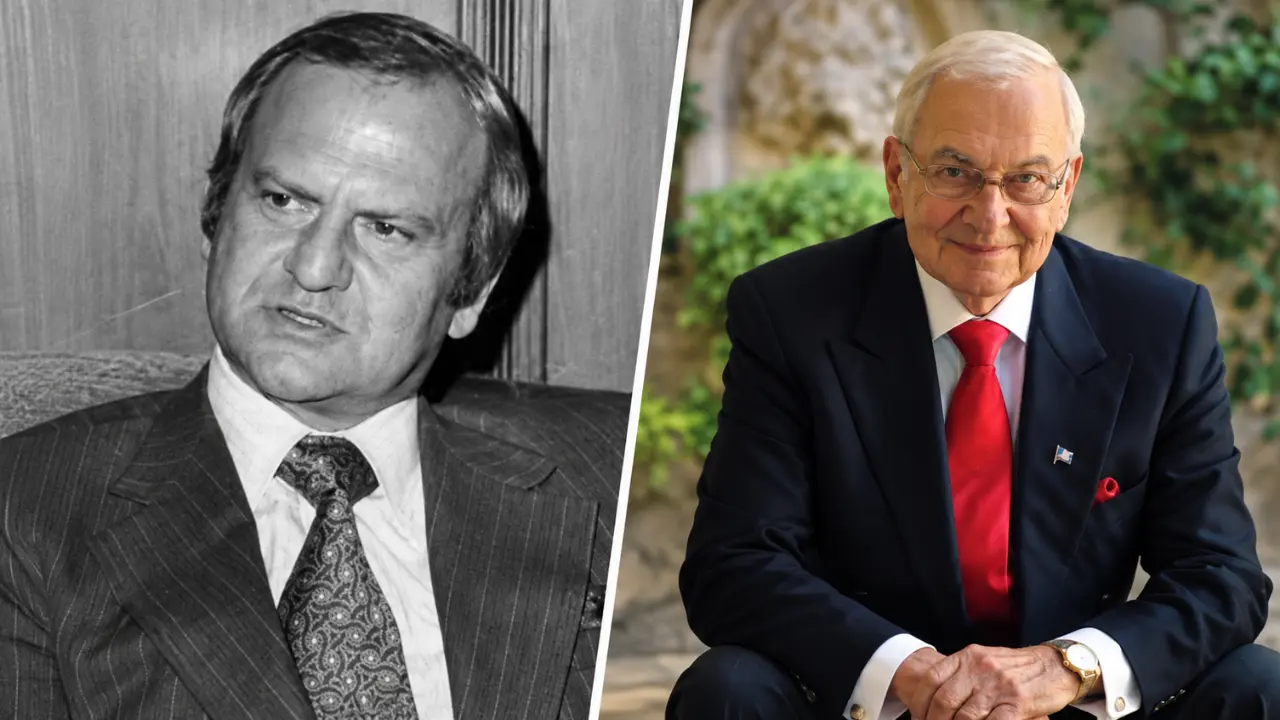
Lee Iacocca was one of the most recognizable business leaders in the American automobile industry. His career took him from an engineering position at Ford Motor Company to the presidency of one of the world’s largest automakers, followed by an even more remarkable second act at Chrysler. He became closely associated with the Ford Mustang, but his reputation was ultimately shaped by the difficult challenge of helping Chrysler recover from the edge of bankruptcy. His career also included advertising, publishing, philanthropy, education, and an interest in electric transportation.
| Biography Detail | Information |
|---|---|
| Full Name | Lido Anthony Iacocca |
| Known As | Lee Iacocca |
| Date of Birth | October 15, 1924 |
| Place of Birth | Allentown, Pennsylvania, United States |
| Nationality | American |
| Ethnicity | Italian-American |
| Education | Lehigh University; Princeton University |
| Degree | Industrial Engineering; Mechanical Engineering |
| Profession | Business Executive, Author, Philanthropist |
| Famous For | Ford Mustang and Chrysler turnaround |
| Ford Position | President of Ford Motor Company |
| Chrysler Position | Chairman and Chief Executive Officer |
| Major Ford Achievement | Helping develop and market the Ford Mustang |
| Major Chrysler Achievement | Leading Chrysler’s financial turnaround |
| Notable Products | Ford Mustang, Chrysler K-car, Chrysler minivans |
| Books | Iacocca: An Autobiography; Where Have All the Leaders Gone? |
| First Wife | Mary McCleary |
| Children | Two daughters |
| Philanthropic Focus | Diabetes research and education |
| University Connection | Lehigh University |
| Date of Death | July 2, 2019 |
| Age at Death | 94 years |
| Place of Death | Los Angeles, California, United States |
| Known For | Leadership, automotive industry, business and philanthropy |
Lee Iacocca Early Life and Family Background
Lee Iacocca was born Lido Anthony Iacocca on October 15, 1924, in Allentown, Pennsylvania. His parents, Nicola Iacocca and Antonietta Perrotta, were Italian immigrants whose family had roots in San Marco dei Cavoti in Italy. His father operated a family business connected with food and restaurants, and the Iacocca family became known in the Allentown area through Yocco’s Hot Dogs. Growing up in a working family environment gave Iacocca an early understanding of business, customers, and the importance of hard work.
The story behind his first name has also attracted attention over the years. A popular explanation suggested that his parents named him Lido because he was conceived during their honeymoon in Venice, but Iacocca later rejected that story in his autobiography. His childhood was also affected by rheumatic fever, an illness that eventually made him medically unfit for military service during World War II. Instead of following a military career, he concentrated on education and engineering. That decision ultimately placed him on the path toward the automobile industry.
Lee Iacocca Education and Engineering Career
Iacocca graduated from Allentown High School in 1942 and went on to study at Lehigh University. He earned a bachelor’s degree in industrial engineering in 1945 and became involved with organizations connected with engineering and student life. He later received a Wallace Memorial Fellowship that allowed him to continue his studies at Princeton University. At Princeton, he earned a master’s degree in mechanical engineering in 1946.
His education gave him a strong technical foundation, but Iacocca soon discovered that his abilities extended beyond engineering. He had a natural interest in sales, communication, marketing, and understanding what customers wanted from a product. That combination of technical knowledge and business instinct became one of the defining characteristics of his career. It allowed him to communicate with engineers while also thinking about products from the perspective of ordinary buyers.
Lee Iacocca Joins Ford Motor Company
After completing his education, Iacocca joined Ford Motor Company in 1946 as an engineering trainee. His first role was connected to the technical side of the automobile business, but he quickly realized that he wanted to work closer to customers and sales. He eventually moved into sales and marketing, where his personality and ability to communicate gave him an opportunity to stand out. The move was important because it placed him on a management path rather than keeping him solely within engineering.
One of the most famous examples of his marketing ability was the “56 for ’56” campaign. While working in Ford’s Philadelphia sales district, Iacocca promoted a financing offer that allowed customers to purchase a 1956 Ford with a 20 percent down payment and monthly payments of $56. The campaign attracted significant attention and became a success within the Philadelphia district before gaining wider recognition. It helped demonstrate that Iacocca understood not only automobiles but also the financial concerns and buying habits of customers.
Lee Iacocca and Other Business Leaders
Lee Iacocca’s career is especially interesting for readers who follow successful business leaders and their approaches to turning struggling companies around. His work at Chrysler, in particular, offers a useful comparison with the career of Marcus Lemonis, who became known for investing in and helping improve struggling businesses through his focus on people, products, and processes. Although the two executives worked in different industries and generations, both became recognized for their hands-on approach to business leadership and their ability to bring attention to companies facing serious challenges. Readers interested in how prominent entrepreneurs and executives built their careers may also enjoy learning more about Marcus Lemonis and his business journey.
Lee Iacocca’s Rise Through Ford
Iacocca’s career at Ford progressed quickly after his success in sales and marketing. He eventually became vice president and general manager of the Ford Division in 1960 and later took on broader responsibilities within the company. By 1967, he had become an executive vice president, and in 1970 he was named president of Ford Motor Company. His rise was notable because he had moved from an engineering trainee to one of the most powerful positions in the company in roughly two and a half decades.
Iacocca was ambitious and had established personal goals for his career. One story from his time at Ford describes how he wanted to become a vice president by the time he was 35. When he reached that age without achieving the goal, he reportedly felt disappointed, only to receive an important call from Henry Ford II shortly afterward. The promotion eventually came, reinforcing the reputation Iacocca had built inside the company. His ability to combine marketing instincts with management experience made him an increasingly important figure at Ford.
Lee Iacocca and the Ford Mustang
The Ford Mustang became one of the defining achievements associated with Lee Iacocca. Ford introduced the Mustang in April 1964, targeting buyers who wanted a sporty-looking automobile without paying the price associated with larger performance cars. Iacocca understood that younger buyers represented an important market opportunity, and he supported the development and marketing strategy that helped bring the Mustang to consumers. The car quickly became a major commercial success and established a lasting place in American automobile culture.
The Mustang story is sometimes simplified by saying that Iacocca personally invented the car, but the reality was more complicated. A major automobile is the result of engineers, designers, manufacturing teams, marketers, executives, and suppliers working together. Iacocca’s importance came from his ability to support the concept, understand the market, push the project through management, and build a commercial strategy around it. Harold Sperlich, another important Ford executive, was later credited by Iacocca as a major product thinker behind both the Mustang and the Chrysler minivan.
Other Ford Projects and Racing
The Mustang was not the only project connected with Iacocca during his Ford years. He was involved with a number of Ford and Mercury products and had a broader interest in developing vehicles that could attract specific groups of customers. His career at Ford also included involvement in the company’s decision to return more aggressively to automobile racing. He reportedly persuaded Henry Ford II that motorsport could strengthen Ford’s image and demonstrate the company’s engineering capabilities.
Ford subsequently achieved major successes in racing, including victories and strong performances at major events. Racing gave Ford additional publicity and helped reinforce the company’s reputation for performance. Iacocca’s involvement demonstrated another part of his management style: he often viewed automobiles not simply as transportation but as products that could create excitement and emotional connections with consumers. That approach became especially valuable when he later took over Chrysler.
Why Was Lee Iacocca Fired From Ford?
Despite his achievements at Ford, Iacocca’s relationship with Henry Ford II eventually deteriorated. The two men had different personalities and reportedly disagreed about management decisions and the future direction of the company. Iacocca had become extremely successful and highly visible, while Ford II remained firmly in control of the family company. Their increasingly difficult relationship eventually reached a point where Iacocca’s position at Ford could not continue.
In July 1978, Henry Ford II dismissed Iacocca from Ford Motor Company. The decision was particularly striking because Ford had reported strong profits around the time of his departure. Iacocca later described the experience as one of the most painful moments of his professional life. Being fired from Ford could have ended his career at the highest level, but instead it became the event that opened the door to the most famous chapter of his business life.
Lee Iacocca Takes Over at Chrysler
After leaving Ford, Iacocca joined Chrysler Corporation at a time when the company was facing severe financial difficulties. Chrysler was struggling with weak sales, high costs, changing consumer preferences, and competition from both American and foreign automakers. The company was approaching a financial crisis that threatened its survival. Iacocca accepted the challenge of becoming Chrysler’s leader and began looking for ways to keep the company alive.
His approach was not based on one decision or one new vehicle. Chrysler needed to reduce expenses, improve its products, negotiate with employees, manage creditors, and find enough financial support to continue operating. Iacocca became the public face of the turnaround and took responsibility for difficult decisions that affected workers, managers, suppliers, and investors. His willingness to communicate directly with the public also helped transform him into a national business personality.
How Lee Iacocca Helped Save Chrysler
The Chrysler turnaround required major sacrifices from almost everyone connected with the company. Iacocca pushed for cost reductions and negotiated with labor leaders for concessions while restructuring Chrysler’s operations. He also reduced executive compensation and worked to convince creditors and government officials that Chrysler could survive if it received temporary assistance. The strategy depended on making the company smaller and more efficient while developing vehicles that customers would actually buy.
The federal government eventually approved legislation providing Chrysler with $1.5 billion in loan guarantees. The assistance was controversial because it meant that taxpayers were taking on financial risk to support a private automobile manufacturer. Iacocca traveled to Washington and became one of the leading public advocates for the rescue package. The government assistance gave Chrysler enough breathing room to continue restructuring and develop its product strategy.
Key elements of the Chrysler turnaround included:
- Reducing operating costs
- Negotiating concessions with employees
- Restructuring management
- Obtaining federal loan guarantees
- Improving production efficiency
- Introducing more competitive vehicles
- Expanding Chrysler’s focus on fuel-efficient automobiles
- Building stronger relationships with dealers and customers
The turnaround was therefore a combination of financial restructuring and product development. Iacocca understood that cutting costs could only take Chrysler so far because the company ultimately needed vehicles that consumers wanted to purchase. The challenge was to survive the immediate financial crisis while creating products capable of producing future revenue. That balance became central to Chrysler’s recovery.
The Chrysler K-Car Strategy
The K-car became one of the most important products in Chrysler’s recovery. The Dodge Aries and Plymouth Reliant were based on the K-car platform and were designed around changing consumer demands for smaller and more fuel-efficient automobiles. The vehicles arrived during a period when American consumers were paying closer attention to fuel economy and operating costs. Chrysler needed affordable vehicles that could compete in a market increasingly influenced by smaller cars.
The K-car strategy also showed why product planning mattered during the turnaround. Chrysler could not depend solely on large vehicles at a time when consumer preferences were changing. The company needed a flexible platform that could support multiple models while controlling manufacturing costs. The K-car provided Chrysler with an important foundation for its recovery and helped the company move toward a different product mix.
Lee Iacocca and the Chrysler Minivan
The Chrysler minivan became another major achievement associated with Iacocca’s leadership. The Dodge Caravan and Plymouth Voyager arrived in the early 1980s and created a new category of family vehicle that combined passenger space with a more manageable size than a traditional full-size van. Families could use them for everyday transportation, school trips, shopping, and vacations. The concept proved highly attractive to American consumers.
The minivan was especially important because it showed that Chrysler’s recovery was not based entirely on government assistance or financial restructuring. New products generated revenue and gave consumers reasons to visit Chrysler dealerships. Iacocca later credited Harold Sperlich as an important product mind behind the minivan concept. The success of the minivan became one of the strongest examples of how Chrysler could compete through product innovation.
Chrysler Repays Its Government-Backed Loans
Chrysler’s recovery eventually became strong enough for the company to repay its government-backed loans earlier than expected. The company announced that it would repay the remaining federally backed loans ahead of schedule, and the final repayment became an important symbol of the turnaround. The development allowed Iacocca and Chrysler to argue that the government assistance had helped preserve the company without leaving taxpayers responsible for a permanent bailout. It also strengthened Iacocca’s reputation as a business leader who had taken a failing company and returned it to financial stability.
The repayment was significant because Chrysler’s earlier situation had looked dramatically different. The company had faced the possibility of collapse, while employees and suppliers were dealing with uncertainty about their futures. Within a few years, Chrysler had new products, improved finances, and greater confidence in its future. Iacocca’s role in that transformation became the central achievement of his career.
Lee Iacocca’s Famous Chrysler Advertising
Iacocca became unusually visible for a corporate executive because of Chrysler’s television advertising. He appeared directly in commercials and spoke to consumers in a straightforward manner. His style was confident and conversational rather than distant or highly formal. The advertising helped make the Chrysler chairman recognizable to millions of Americans.
His commercials also demonstrated how strongly Iacocca understood personal branding. He did not hide behind the company name or use an anonymous corporate spokesperson. Instead, he made himself part of the sales message and connected his reputation with the quality of Chrysler vehicles. That strategy helped turn him into one of the most famous business executives of his generation.
Lee Iacocca’s Leadership Style
Lee Iacocca’s leadership style combined confidence, sales ability, financial pressure, and direct communication. He was comfortable negotiating with government officials, labor leaders, executives, and customers. His engineering education allowed him to understand technical discussions, while his years in sales taught him to think about products from the customer’s perspective. Those abilities helped him move between very different parts of the automobile business.
His career also demonstrates that leadership can involve difficult decisions rather than only successful product launches. At Chrysler, he had to support layoffs, cost reductions, plant changes, executive sacrifices, and labor concessions. Some of those decisions were unpopular, but he believed they were necessary to preserve the company. His willingness to take responsibility publicly became one of the reasons his name remained strongly associated with the Chrysler turnaround.
Lee Iacocca Books and Business Ideas
Iacocca also became a successful author. His best-known book, Iacocca: An Autobiography, was written with William Novak and published in 1984. The book discussed his childhood, education, Ford career, relationship with Henry Ford II, dismissal from Ford, and struggle to save Chrysler. It gave readers an opportunity to hear his own perspective on the events that shaped his reputation.
He later co-authored Where Have All the Leaders Gone?, a book that reflected his views about leadership, business, government, and America’s future. His books extended his influence beyond the automobile industry and helped establish him as a commentator on American leadership. They also provided a record of how he viewed his own career and the challenges facing businesses. For readers interested in business history, his writing remains an important part of his legacy.
Lee Iacocca After Chrysler
Iacocca retired as Chrysler’s chairman and chief executive in 1992, but retirement did not mean that he disappeared from public life. He remained involved in business, philanthropy, writing, and transportation-related projects. His later activities included work with companies outside the traditional automobile industry. He also maintained a public presence through interviews and advertising appearances.
One unusual chapter of his later career involved electric transportation. Iacocca became involved with electric bicycles and helped establish a company focused on electric bicycle technology. He later became associated with EV Global Motors. This interest was notable because it showed that his involvement with transportation continued even as the automobile industry began considering alternatives to traditional gasoline-powered vehicles.
Lee Iacocca Family and Personal Life
Iacocca’s personal life included three marriages. His first wife, Mary McCleary, whom he married in 1956, died in 1983 after complications related to diabetes. He later married Peggy Johnson, although that marriage was annulled, and subsequently married Darrien Earle before their divorce. Iacocca had two daughters and remained connected to his family throughout his later life.
The death of his first wife had a lasting effect on his philanthropic work. Diabetes research became a major personal cause for him, and he supported organizations and initiatives focused on finding better treatments and ultimately a cure. His involvement in diabetes research was not simply another corporate charitable activity because it was connected directly to his family’s experience. This personal connection gave his philanthropy a clear purpose.
Lee Iacocca Philanthropy and Lehigh University
Iacocca maintained a strong relationship with Lehigh University long after completing his education. He supported educational programs and became associated with the Iacocca Institute at Lehigh. His relationship with the university reflected his belief that education could prepare people for leadership and professional success. He also supported programs connected with international education and professional development.
His philanthropic interests extended beyond education. The Iacocca Family Foundation supported diabetes research, reflecting the impact of his first wife’s death. His charitable work became an important part of his later reputation. While his business career was built around automobiles, his later years showed a broader interest in education, medical research, and public service.
Lee Iacocca Death and Final Years
Lee Iacocca died on July 2, 2019, in Los Angeles, California. He was 94 years old. By the time of his death, he had spent more than seven decades connected to American business, transportation, and public life. His career had included one of the most famous rises in the history of Ford and one of the most closely watched corporate turnarounds at Chrysler.
His death prompted widespread recognition of his influence on the automobile industry. The Mustang remained one of Ford’s most famous products, while Chrysler’s survival became the defining accomplishment of his later career. His public appearances also changed the way Americans viewed corporate executives, making it possible for a business leader to become a household name. His story remains relevant because it combines personal ambition, corporate conflict, financial crisis, product development, and leadership.
Lee Iacocca’s Lasting Legacy
The legacy of Lee Iacocca cannot be reduced to the Ford Mustang or Chrysler’s financial recovery alone. His career illustrates how an executive can move between engineering, sales, marketing, finance, government relations, and public communication. He understood that automobile companies needed more than good engineering because they also needed products that matched changing consumer expectations. His career at two competing American automakers gave him an unusual perspective on the strengths and weaknesses of the industry.
Several parts of his legacy continue to stand out:
- His role in the success of the Ford Mustang
- His rise from engineering trainee to Ford president
- His dramatic dismissal from Ford
- His leadership during Chrysler’s financial crisis
- His role in securing federal loan guarantees
- The success of the K-car strategy
- The introduction of Chrysler’s minivans
- His memorable television advertising
- His books about business and leadership
- His support for diabetes research
- His continuing connection with Lehigh University
- His interest in electric transportation
What makes Iacocca’s story particularly interesting is the contrast between his two major corporate chapters. At Ford, he became one of the company’s most successful executives before being dismissed after a conflict with Henry Ford II. At Chrysler, he took control of a company in serious financial trouble and became the public face of its recovery. His career therefore contains both an extraordinary corporate rise and an equally dramatic professional setback.
Frequently Asked Questions About Lee Iacocca
Who was Lee Iacocca?
Lee Iacocca was an American automobile executive best known for his leadership positions at Ford Motor Company and Chrysler Corporation. He played an important role in the development and marketing of the Ford Mustang and later became president of Ford. After leaving Ford, he became chairman and chief executive of Chrysler during a serious financial crisis. His leadership helped the company restructure its finances and introduce successful products such as the K-car and minivan.
What was Lee Iacocca famous for?
Lee Iacocca was famous for his role in the success of the Ford Mustang and for leading Chrysler through a major financial crisis. He became particularly well known after appearing in Chrysler television commercials and speaking directly to American consumers. His work securing federal loan guarantees and restructuring Chrysler made him one of the most recognizable executives in American business. He was also known for his books, philanthropy, and involvement in diabetes research.
Why was Lee Iacocca fired from Ford?
Lee Iacocca was fired from Ford in 1978 after his relationship with company chairman Henry Ford II deteriorated. The two executives reportedly disagreed about management decisions and the direction of the company. Iacocca’s dismissal was particularly surprising because Ford was financially successful around the time he left. His firing ultimately led to his move to Chrysler, where he achieved another major chapter of his career.
How did Lee Iacocca help save Chrysler?
Lee Iacocca helped save Chrysler through a combination of financial restructuring, cost reductions, labor negotiations, management changes, government support, and new vehicle programs. He helped secure $1.5 billion in federal loan guarantees that gave Chrysler time to reorganize its business. The company also introduced successful products including the K-car-based models and the Dodge Caravan and Plymouth Voyager minivans. Chrysler eventually repaid its government-backed loans ahead of schedule.
When did Lee Iacocca die?
Lee Iacocca died on July 2, 2019, at the age of 94. He died in Los Angeles, California, after a long career in the American automobile industry. At the time of his death, he was remembered for his leadership at both Ford and Chrysler. His influence continued through the Mustang, Chrysler’s turnaround, his books, philanthropic work, and his place in American business history.
Conclusion
Lee Iacocca built a career that changed dramatically more than once. He began as an engineer at Ford, moved into sales and marketing, helped develop the strategy behind the Mustang, and eventually became president of the company before being fired by Henry Ford II. His next move to Chrysler placed him in charge of a company facing a serious financial crisis, where he combined government assistance, cost reductions, labor negotiations, and new products to rebuild the business. The K-car and minivan became important parts of that recovery and helped transform his reputation from successful Ford executive into one of America’s most famous business leaders.
Beyond the automobile industry, Iacocca’s later life included books, philanthropy, education, diabetes research, and an interest in electric transportation. His personal experiences, particularly the death of his first wife, influenced the causes he supported after leaving Chrysler. His life demonstrates how business success can involve both major victories and painful setbacks. For anyone studying American business history, automobile history, or leadership, the story of Lee Iacocca remains a compelling example of ambition, resilience, and the ability to rebuild after a major professional defeat.
Readers interested in the lives and careers of other well-known personalities can explore our Celebrity Biography category for more detailed life stories, career journeys, and personal backgrounds.